
KVK Electronic Filing Mandate 2026: Penalties, Deadlines, and How to Avoid Rejection
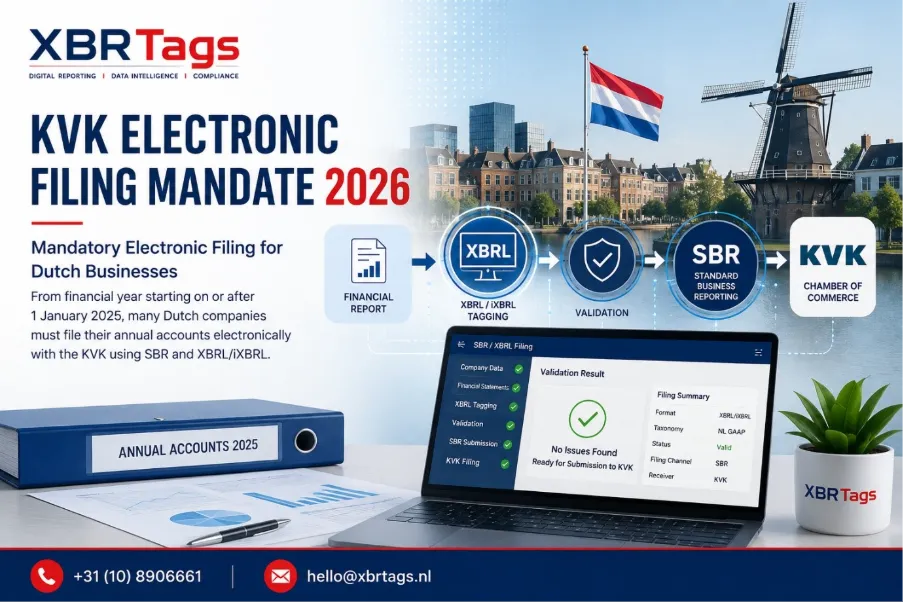
Filing annual accounts is a normal part of running a business in the Netherlands. But the way companies submit these accounts is changing — filing is no longer just about preparing financial statements and sending documents to KVK.
For many Dutch companies, 2026 is an important year. Electronic filing rules now cover more types of legal entities, including large legal entities for financial years that start on or after 1 January 2025. This means businesses preparing their annual accounts in 2026 need to understand both what they are reporting and how they need to submit it.For a broader overview of the requirements, see our Netherlands XBRL guide.
A missed deadline, wrong company detail, or technical error can cause delays and compliance issues. The good news is that many of these problems can be avoided with early planning and a careful review.
This guide explains what the KVK electronic filing mandate means in 2026, the key filing deadlines, what can happen if accounts are filed late, and how businesses can reduce the risk of rejection.
What Does the KVK Electronic Filing Mandate Mean?
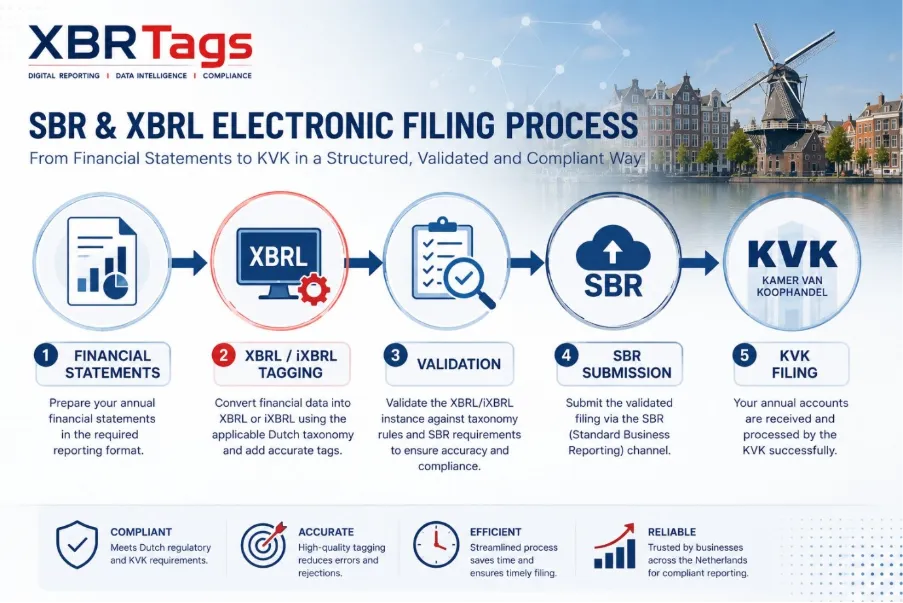
The Netherlands has been moving towards digital business reporting through the Standard Business Reporting (SBR) framework. SBR helps make financial reporting more consistent by allowing businesses to submit financial information in a structured digital format.
Instead of relying only on traditional documents such as PDFs or paper reports, companies may need to submit financial information in structured formats such as XBRL or XHTML/iXBRL. If you’re unfamiliar with the basics, our what is XBRL guide is a good starting point.
Smaller businesses have already been using electronic filing for some time. The requirement has gradually expanded, and large legal entities are now also covered for financial years beginning on or after 1 January 2025.
This makes 2026 particularly relevant. For example, a company with a financial year ending in December 2025 may prepare and file its annual accounts during 2026. If the company is covered by the electronic filing rules, the filing must meet the applicable digital reporting requirements.— see our dedicated page on KVK XBRL annual accounts in the Netherlands for more detail.
For businesses that have always used the same process, this may mean some changes. Preparing the financial statements is still the first step. However, the final filing may also involve data mapping, tagging, validation, and electronic submission — you can read more about how XBRL tagging works.
KVK Filing Deadlines: What Businesses Need to Know
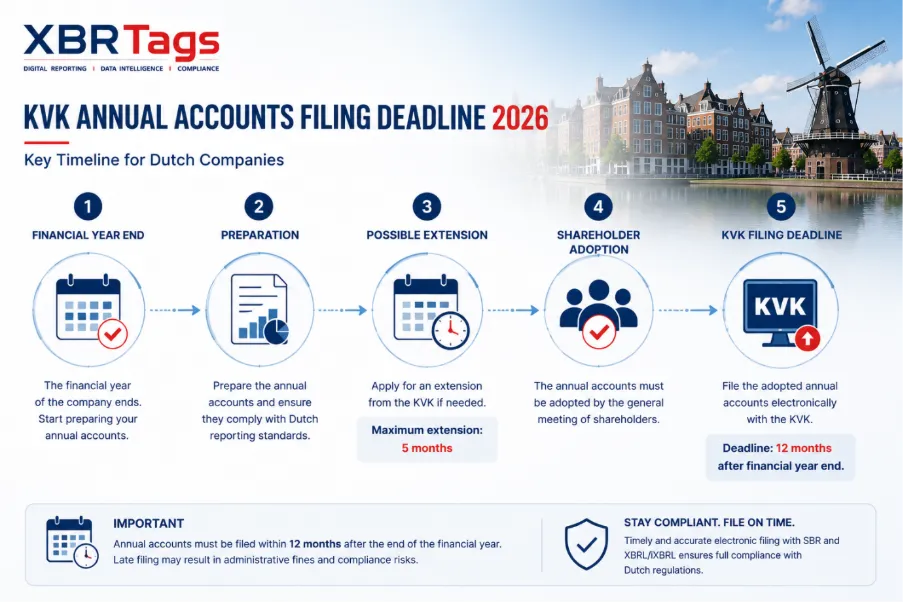
One of the most common mistakes is leaving the filing process until the deadline is close. For many Dutch BVs, the management board normally has five months after the end of the financial year to prepare the annual accounts. In certain cases, shareholders can grant an extension of up to five additional months. Once the accounts are prepared, they must be adopted according to the applicable legal requirements. After adoption, the accounts generally need to be filed with KVK within eight days.
There is also a maximum statutory period for filing. Because of this, businesses should not focus only on the final filing date.
A better approach is to work backwards from the deadline. Allow enough time to prepare the accounts, review the figures, convert the information into the required electronic format, check the tags, and fix any validation errors. Electronic filing should not be left until the final week.
What Happens If You File Late?
Late filing can create more than an administrative headache.
Filing annual accounts is a legal obligation. Companies that do not meet the required deadlines may face fines or other legal consequences. In some insolvency cases, failure to meet statutory filing duties can also create extra risks for company directors.
This is why businesses should not treat the filing deadline as the day they start the submission process.
Having the annual accounts and electronic filing package ready early gives the company time to find and correct errors. It also reduces the pressure that comes with trying to fix technical issues at the last minute.
Why Are Electronic Filings Rejected or Delayed?
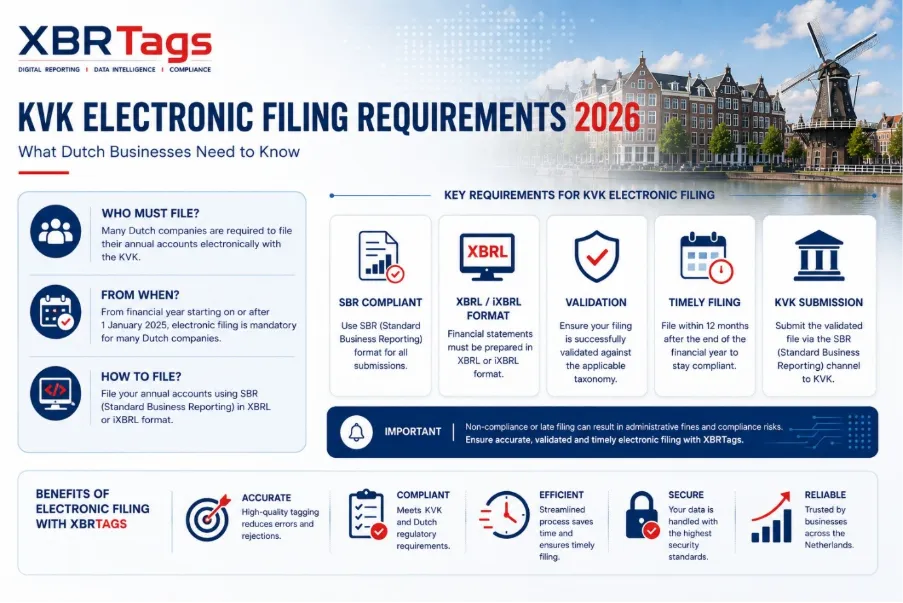
A financial report may look correct when read as a normal document but still have technical problems in its electronic version. This is one of the main differences between traditional reporting and structured digital reporting.
Incorrect KVK Number
Using the wrong KVK number can cause problems because the electronic filing must match the legal entity submitting the annual accounts. Before filing, check the KVK number, legal entity name, and other company details carefully. A simple check can prevent unnecessary delays.
Using the Wrong Filing Format
Another common problem is using a format that does not meet the applicable electronic filing rules.A PDF may be useful for internal review, but where structured reporting is required, the information may need to be submitted through XBRL or XHTML/iXBRL. This also applies to listed companies preparing ESEF XBRL tagging filings under separate reporting obligations. The required format should be confirmed before the filing is prepared.
Incorrect Entity Classification
Reporting requirements can vary depending on whether a company is classed as micro, small, medium-sized, or large. A business can also move into a different classification as it grows. This may change the information it needs to report and the filing process it must follow. Use our KVK Tax Category Checker to check where your business currently stands. Companies should therefore check their current classification instead of automatically using the same process as the previous year.
Tagging and Taxonomy Errors
XBRL and iXBRL use digital tags to identify financial information. Each figure needs to be linked to the right reporting concept in the applicable taxonomy. If a figure is tagged incorrectly, missing, or mapped to the wrong concept, validation problems can occur. Other common issues include missing disclosures, incorrect dates, inconsistent reporting periods, and incorrect financial mappings.
These errors may not be obvious when someone reads the accounts. Technical validation is therefore an important part of the filing process.
How to Avoid KVK Filing Rejection
The best way to reduce filing problems is to think about electronic reporting from the start.
Start Earlier Than You Think You Need To
Do not wait until the annual accounts are completely finished before checking the electronic filing requirements. Confirm the reporting format and technical requirements early. This gives you more time to deal with problems before the deadline.
Check Company Details Carefully
Before starting the electronic filing process, confirm:
- The correct KVK number
- The legal entity name
- The financial year
- The company size classification
- The applicable reporting requirements
These checks are simple, but they can prevent avoidable errors.
Use the Right Taxonomy
Taxonomies and reporting requirements can change over time. Do not simply copy the structure used for an old filing. Check that the taxonomy and reporting structure are suitable for the current reporting period. Using the correct taxonomy helps ensure that financial information is mapped and structured correctly.
Validate Before Submission
Validation should not be the last task completed just before filing. Review the financial data, mandatory disclosures, tags, reporting periods, and other technical requirements before submission. Finding an error early gives you enough time to correct it without putting the filing deadline at risk.
How XBRTags Netherlands Can Support Your Filing Process
For many businesses, preparing the annual accounts is not the hardest part. The more technical step is turning those accounts into a structured electronic filing.
At XBRTags Netherlands, we support businesses and accounting firms with XBRL and iXBRL reporting requirements. If you’re an accounting firm managing filings for multiple clients, see our XBRL services for accounting firms.
- Converting financial statements into structured formats
- XBRL and iXBRL tagging
- Taxonomy mapping
- Technical validation
- Preparing submission-ready filing packages
- Supporting businesses with SBR reporting requirements
You can also check our XBRL tagging pricing for an overview of our service costs.
The goal is to make the technical side of electronic reporting easier to manage while helping businesses reduce the risk of errors and delays.
Conclusion
Electronic filing is changing how businesses handle annual reporting in the Netherlands. For companies affected by the expanded requirements, 2026 is a good time to review their current filing process and make sure it is ready for structured electronic reporting.
Most filing problems can be avoided. They often happen because businesses start too late, use incorrect company details, follow an outdated process, or discover technical errors at the final stage.
Starting early can make a big difference. By checking the filing deadlines, confirming the applicable requirements, using the right reporting format, and validating the filing before submission, businesses can reduce the risk of rejection and make the KVK filing process easier.
Electronic filing may involve more technical steps than traditional reporting. However, with proper preparation and the right support, it does not have to be complicated.
Frequently asked questions
Yes. Electronic filing requirements apply to different categories of Dutch legal entities. The requirement has also been extended to large legal entities for financial years beginning on or after 1 January 2025. The exact filing method depends on the entity and its reporting requirements.
For many Dutch BVs, annual accounts generally need to be filed within eight days after adoption. There is also a maximum statutory filing period, so businesses should plan the preparation and approval process in advance.
Late filing may result in fines or other legal consequences. In certain insolvency situations, failure to meet filing duties may also create additional risks for company directors.
The required format depends on the type and size of the legal entity. Depending on the applicable rules, annual accounts may need to be submitted using structured formats such as XBRL or XHTML/iXBRL.
Problems can result from incorrect KVK details, unsuitable formats, incorrect taxonomy mapping, missing information, or XBRL validation errors. Checking and validating the filing before submission can help prevent these issues.
XBRL tagging links financial information in annual accounts to specific concepts in a reporting taxonomy. This allows financial information to be submitted in a structured and machine-readable format.
Yes. XBRTags Netherlands can support businesses with XBRL and iXBRL conversion, taxonomy mapping, tagging, technical validation, and preparation of electronic filing packages for applicable reporting requirements.
Need Help with Your KVK Electronic Filing?
Make your 2026 KVK filing process easier with professional XBRL and iXBRL support. XBRTags Netherlands can help with tagging, taxonomy mapping, validation, and preparing financial statements for electronic reporting. Get in touch with XBRTags Netherlands today and make your KVK filing ready for submission.
Get in touch with XBRTags Netherlands today and make your KVK filing ready for submission.